Vestibular Physio Conditions & Rehabilitation
Introduction
Sudden severe vertigo or dizziness when changing head positions can be a frightening and unpleasant experience. These symptoms often occur due to several vestibular conditions affecting the inner ear balance system.
At Physio Solutions in Gorey, our physiotherapists provide specialised vestibular assessment and treatment to help identify the cause of your vertigo and guide you through an effective recovery plan.
If you are experiencing vestibular issues, please see our dedicated guides below:
- BPPV (Benign Paroxysmal Positional Vertigo)
- Epley Manoeuvre
- Vertigo When Lying Down
- Sudden Severe Vertigo
BPPV (Benign Paroxysmal Positional Vertigo)
BPPV Treatment in Gorey
Benign Paroxysmal Positional Vertigo (BPPV) is one of the most common causes of vertigo. It causes brief episodes of spinning dizziness that occur when the head changes position. Although these symptoms can be alarming, BPPV is usually a benign and treatable condition. At Physio Solutions in Gorey, our physiotherapists provide specialised vestibular assessment and treatment for BPPV.
People with BPPV often notice symptoms when:
- Turning over in bed
- Lying down
- Getting up from bed
- Looking up or bending down
What Causes BPPV?
Inside the inner ear are small calcium crystals that help the body detect movement and maintain balance. In BPPV, some of these crystals become displaced and move into the semicircular canals of the inner ear. When the head changes position, the crystals move within the canal and trigger abnormal signals to the brain. This mismatch in signals causes the sensation of spinning known as vertigo.
Symptoms of BPPV
The spinning sensation usually lasts less than a minute, but the experience can be very unpleasant. Common symptoms include:
- Brief spinning sensation when changing head position
- Dizziness when turning in bed
- Vertigo when lying down
- Nausea associated with dizziness
- Balance disturbance during episodes
How Physiotherapy Treats BPPV
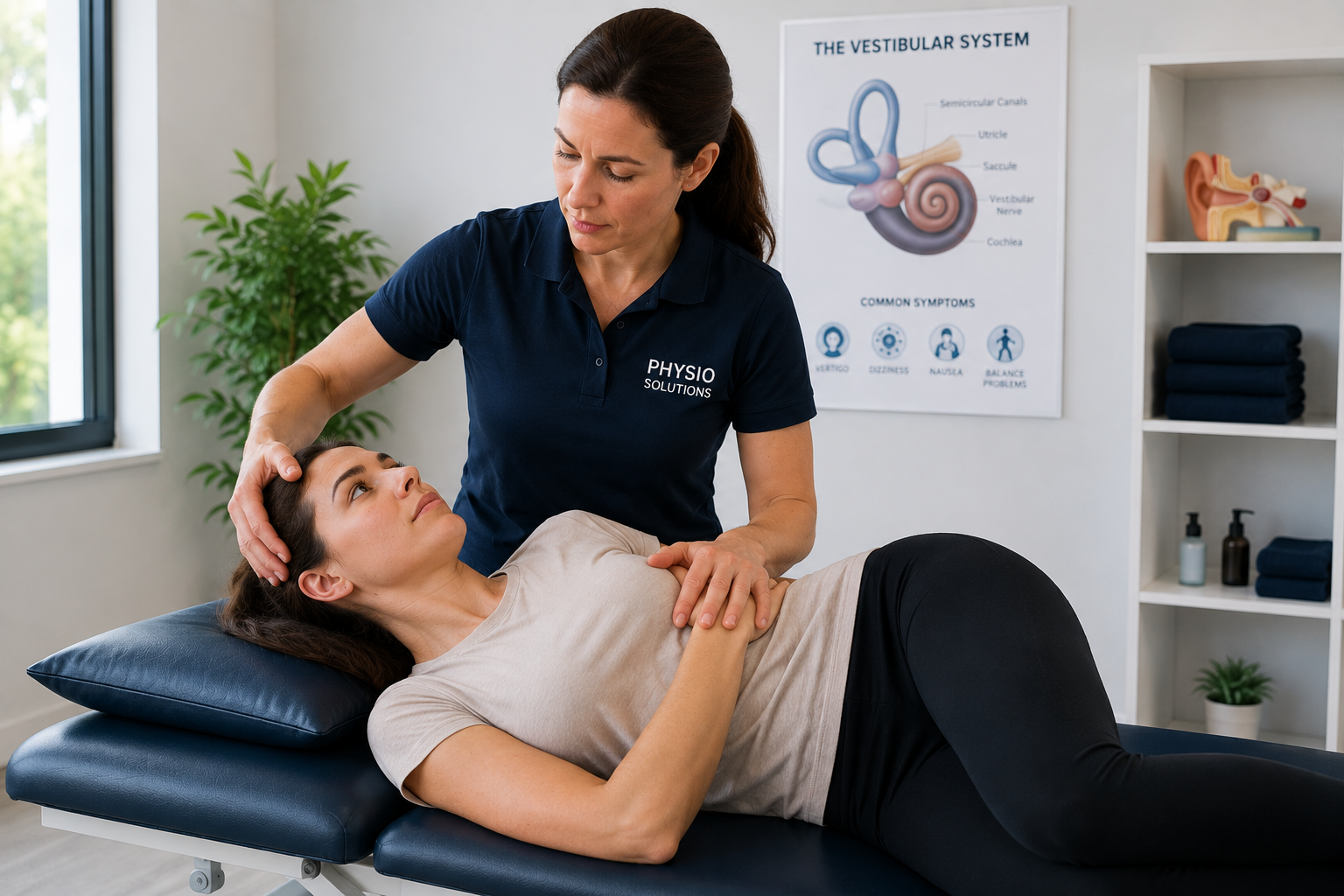
BPPV can often be treated very effectively using specific repositioning techniques. One of the most common treatments is the Epley manoeuvre, which helps move the displaced crystals back to their correct position within the inner ear. This treatment is performed by a physiotherapist trained in vestibular rehabilitation. In many cases, symptoms improve significantly after treatment.
Vestibular Physiotherapy for BPPV
Following successful repositioning of the crystals, physiotherapy may include exercises to help restore normal balance and reduce any lingering dizziness. Vestibular rehabilitation exercises help the brain adapt and improve balance control.
When Should You Seek Treatment?
You may benefit from physiotherapy assessment if you experience:
- Dizziness when turning in bed
- Vertigo when lying down
- Sudden spinning sensations when moving your head
- Repeated episodes of positional dizziness
These symptoms are commonly associated with BPPV and can often be treated successfully with vestibular physiotherapy.
Book a Vestibular Physiotherapy Assessment
If you are experiencing dizziness or vertigo, a physiotherapy assessment can help identify the cause and guide appropriate treatment. The physiotherapists at Physio Solutions in Gorey provide specialised assessment and treatment for vestibular conditions including BPPV. Book an appointment today to start your recovery.
Epley Manoeuvre
Epley Manoeuvre for Vertigo Treatment
The Epley manoeuvre is a specialised treatment used to treat a common cause of vertigo known as Benign Paroxysmal Positional Vertigo (BPPV). This manoeuvre involves a sequence of head and body movements designed to reposition small crystals in the inner ear that have become displaced.
The Epley manoeuvre is widely recognised as one of the most effective treatments for BPPV. At Physio Solutions in Gorey, our physiotherapists are trained in vestibular rehabilitation and can perform this manoeuvre as part of a full vestibular assessment.
Why the Epley Manoeuvre Works
The inner ear contains tiny calcium crystals that help detect movement and maintain balance. In BPPV these crystals move into the wrong part of the inner ear. When the head changes position, the crystals move within the semicircular canals and trigger the sensation of spinning. The Epley manoeuvre works by guiding the crystals back to their correct position in the inner ear where they no longer trigger vertigo.
What Happens During the Epley Manoeuvre?
During the procedure your physiotherapist will guide you through a series of specific head positions. Each position is held briefly to allow the crystals to move through the inner ear canal. Although the manoeuvre may temporarily trigger dizziness, it is usually well tolerated and only lasts a short time.
How Effective Is the Epley Manoeuvre?
For many people with BPPV, the Epley manoeuvre can provide rapid relief from symptoms. Some patients experience improvement after a single treatment session, while others may require additional sessions depending on the severity of symptoms.
Vestibular Physiotherapy After the Manoeuvre
Following treatment, your physiotherapist may recommend vestibular exercises to help restore balance and reduce any remaining dizziness. These exercises help the brain adapt and improve the coordination between the inner ear and the visual system.
When Should You Seek Treatment?
You may benefit from the Epley manoeuvre if you experience:
- Vertigo when lying down
- Dizziness when turning in bed
- Spinning sensations when looking up
- Brief episodes of positional vertigo
These symptoms are commonly associated with BPPV.
Book a Vestibular Physiotherapy Appointment
If you are experiencing vertigo or dizziness related to head movement, vestibular physiotherapy may help. The physiotherapists at Physio Solutions in Gorey provide specialised vestibular assessment and treatment including the Epley manoeuvre. Book an appointment today to start your recovery.
Vertigo When Lying Down
Dizziness or Vertigo When Lying Down
Experiencing vertigo when lying down or turning over in bed is a common symptom of certain vestibular conditions. Many people describe the sensation as the room spinning when they lie down, roll over in bed, or sit up. Although these symptoms can be alarming, they are often caused by a condition known as Benign Paroxysmal Positional Vertigo (BPPV), which can usually be treated effectively with physiotherapy. At Physio Solutions in Gorey, our physiotherapists provide specialised vestibular assessments to identify the cause of dizziness and guide appropriate treatment.
Why Vertigo Happens When Lying Down
Vertigo when lying down is most commonly related to problems within the inner ear balance system. The inner ear contains tiny calcium crystals that help detect head movement and maintain balance. In BPPV, these crystals become displaced and move into one of the semicircular canals. When the head changes position, such as when lying down or turning in bed, the crystals move within the canal and trigger the sensation of spinning.
Common Symptoms
These episodes are usually short but may feel intense while they occur. Symptoms may include:
- Vertigo when lying down
- Dizziness when turning in bed
- Spinning sensation when getting up from bed
- Nausea associated with vertigo
- Brief episodes of dizziness lasting seconds
Physiotherapy Treatment
Physiotherapy can be very effective in treating positional vertigo. Many patients experience significant improvement after treatment.
Treatment may include:
- Vestibular Assessment: Specialised tests to determine which part of the inner ear is affected.
- Canalith Repositioning Manoeuvres: Techniques such as the Epley manoeuvre are used to reposition displaced crystals within the inner ear.
- Vestibular Rehabilitation Exercises: Exercises designed to help the brain adapt and restore balance.
When Should You Seek Assessment?
You may benefit from vestibular physiotherapy if you experience:
- Repeated vertigo when lying down
- Dizziness when rolling over in bed
- Spinning sensations triggered by head movement
Early treatment can often resolve symptoms quickly.
Book a Vestibular Physiotherapy Assessment
If you are experiencing vertigo or dizziness, a physiotherapy assessment can help identify the cause and guide effective treatment. The physiotherapists at Physio Solutions in Gorey provide specialised vestibular physiotherapy for dizziness and vertigo. Book an appointment today to start your recovery.
Sudden Severe Vertigo
Sudden Onset Vertigo
Sudden severe vertigo can be a frightening experience. People often describe a sudden spinning sensation that may be accompanied by nausea, vomiting or difficulty maintaining balance. These symptoms can occur due to several vestibular conditions affecting the inner ear. At Physio Solutions in Gorey, vestibular physiotherapy assessment can help identify the cause of vertigo and guide appropriate treatment.
Possible Causes of Sudden Vertigo
Sudden vertigo may occur due to several conditions including:
- Vestibular Neuritis: Vestibular neuritis occurs when the vestibular nerve becomes inflamed, often due to a viral infection. Although symptoms can be severe initially, many people recover well with appropriate treatment and vestibular rehabilitation.
Symptoms of vestibular neuritis may include:
- Sudden spinning dizziness
- Severe nausea
- Difficulty standing or walking
- Dizziness with head movement
Warning Symptoms
- Difficulty speaking
- Double vision
These symptoms may indicate other medical conditions that require urgent assessment.
Vestibular Physiotherapy in Gorey
If you are experiencing vertigo, dizziness or balance problems, vestibular physiotherapy may help. The physiotherapists at Physio Solutions in Gorey provide specialised assessment and treatment for vestibular disorders. Book an appointment today to start your recovery.