Sports Injuries Conditions & Rehabilitation
Introduction
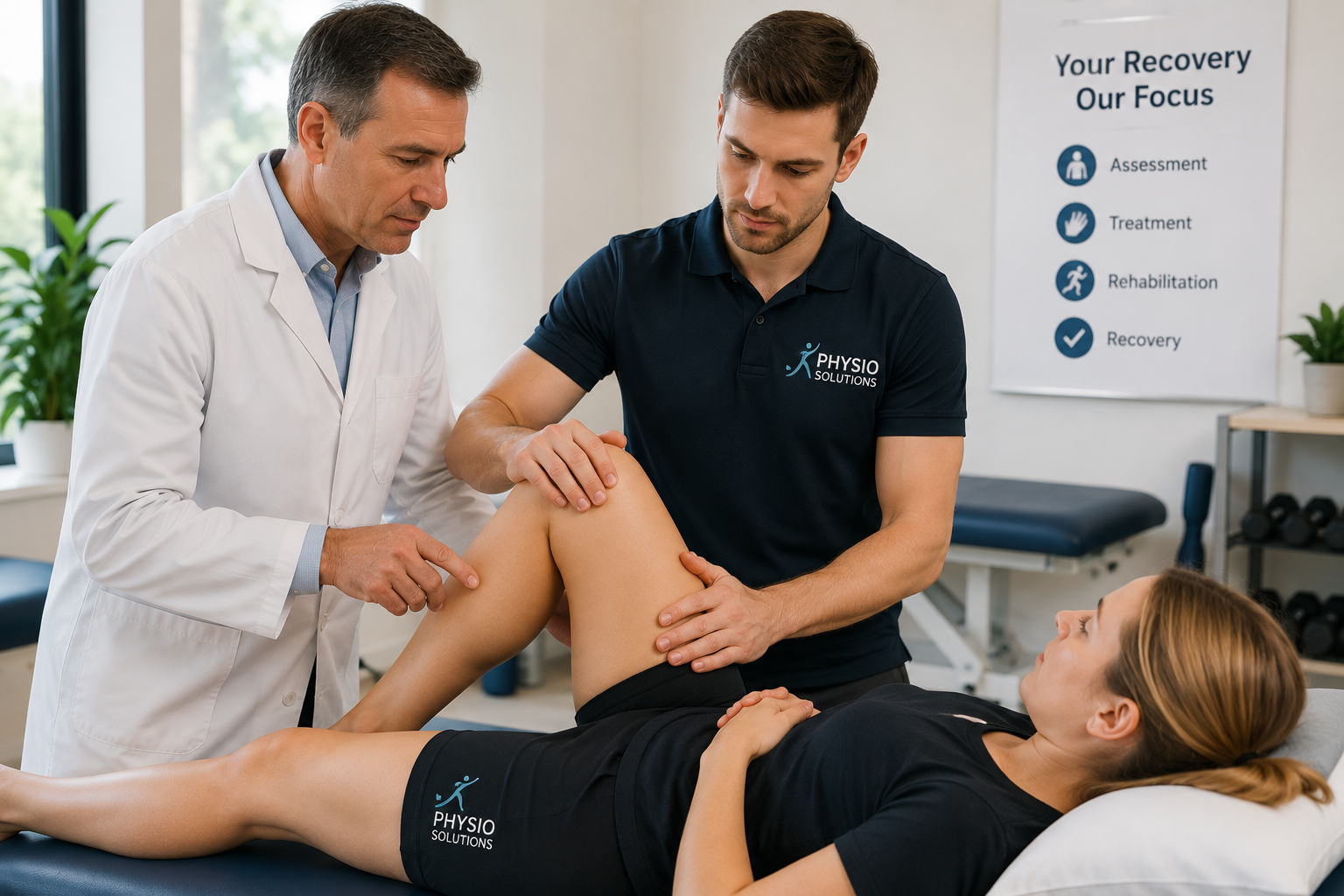
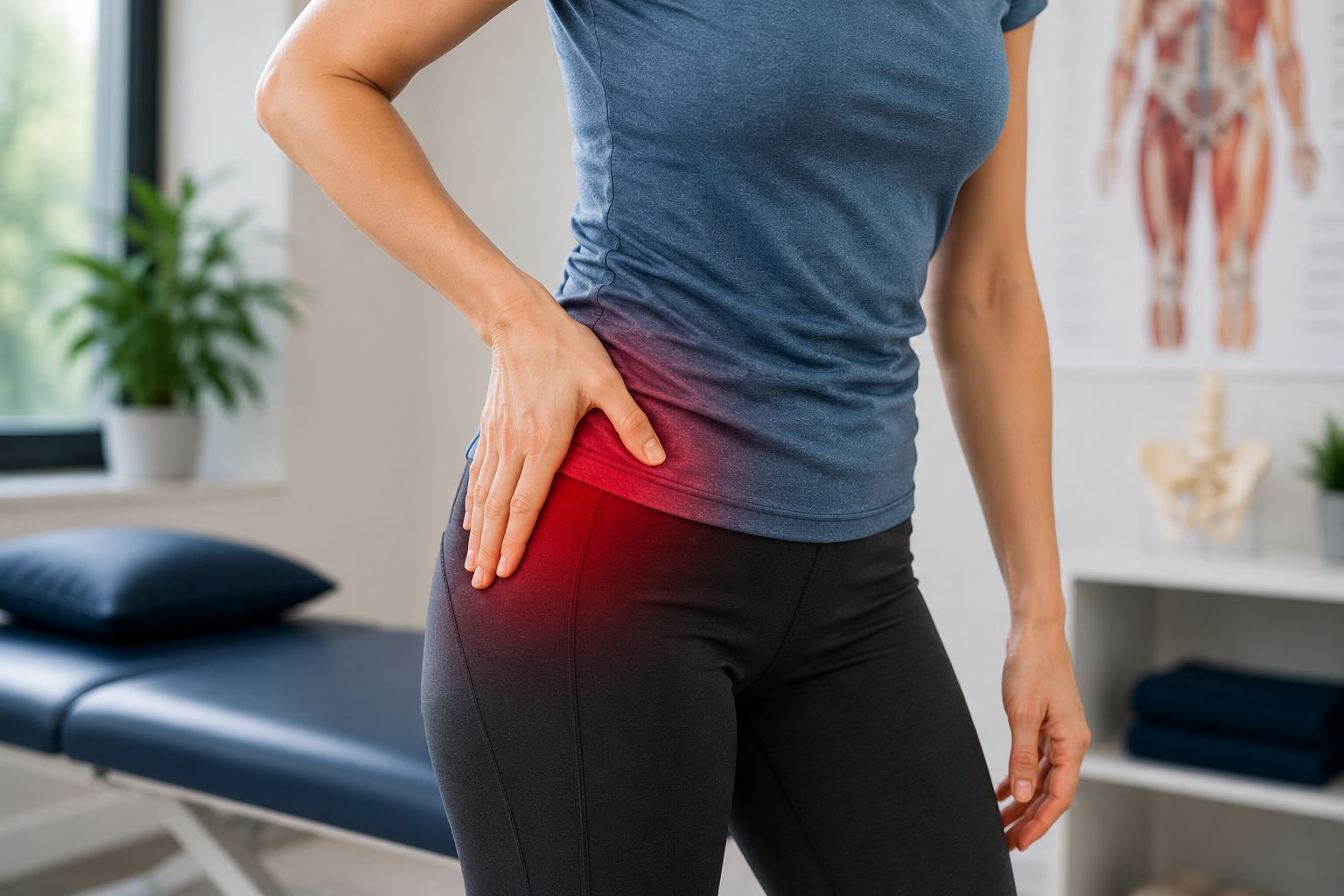
Injuries such as ligament tears, muscle strains, and sprains are common in active individuals and athletes. At Physio Solutions in Gorey, we provide expert assessment and rehabilitation for sports injuries, helping athletes return to sport safely and reduce the risk of reinjury.
If you are experiencing a sports-related injury, please see our dedicated guides below:
- ACL Injury & Rehabilitation
- Hamstring Strain & Rehabilitation
- Ankle Sprain & Rehabilitation
- Groin Strain (Adductor Injury) & Rehabilitation
- Calf Strain (Pulled Calf Muscle) & Rehabilitation
ACL Injury & Rehabilitation
ACL Injury Treatment in Gorey
An anterior cruciate ligament (ACL) injury is one of the most serious and common knee injuries in sport. ACL injuries typically occur during activities involving:
- sudden changes of direction
- pivoting or twisting movements
- jumping and landing
- deceleration during running
Sports such as GAA, soccer and rugby place high demands on the knee, making ACL injuries relatively common. At Physio Solutions in Gorey, we provide expert assessment and rehabilitation for ACL injuries, whether treated conservatively or following surgery.
What Is an Act Injury?
The anterior cruciate ligament (ACL) is one of the main stabilising ligaments of the knee. It helps control forward movement and rotation of the joint. When the ACL is injured or torn, the knee may become unstable, particularly during sport. ACL injuries can range from:
- minor sprains
- partial tears
- complete ruptures
Symptoms of an ACL Injury
Common symptoms include:
- a popping sensation at the time of injury
- swelling in the knee
- instability or the knee “giving way”
- difficulty returning to sport
- reduced confidence in the knee
Do You Need Surgery for an ACL Injury?
Not all ACL injuries require surgery. Treatment depends on:
- your age
- activity level
- type of sport
- degree of instability
Athletes involved in pivoting sports often require ACL reconstruction surgery, while others may successfully rehabilitate without surgery. A physiotherapy assessment can help guide this decision.
ACL Rehabilitation
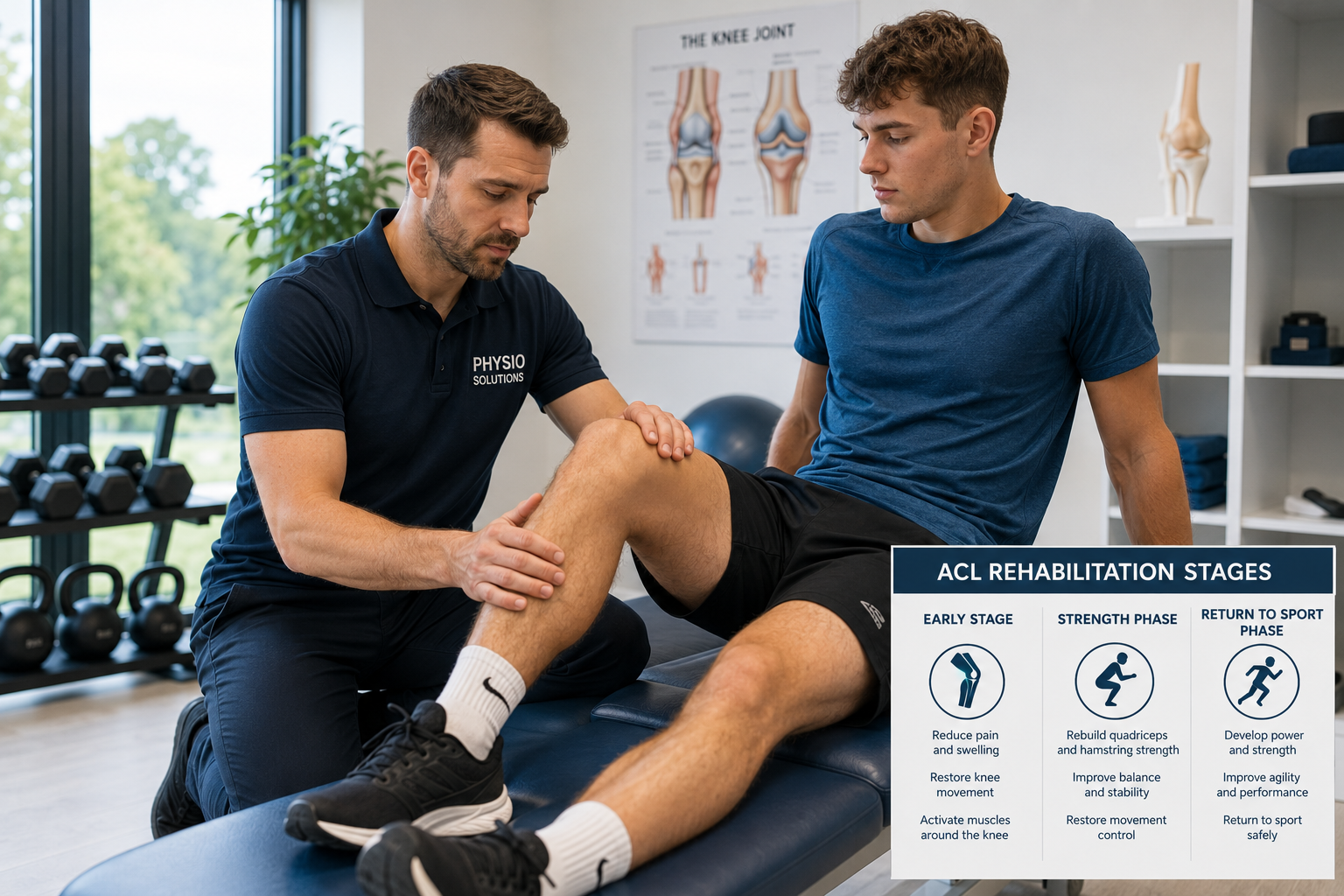
Rehabilitation is essential for recovery from an ACL injury, whether treated surgically or conservatively. Recovery typically progresses through stages:
Early Stage
- reduce pain and swelling
- restore knee movement
- activate muscles around the knee
Strength Phase
- rebuild quadriceps and hamstring strength
- improve balance and stability
- restore movement control
Return to Sport Phase
- develop power and strength
- improve agility and coordination
- introduce sport-specific movements
Objective Strength Testing
At Physio Solutions we use objective strength testing equipment to guide ACL rehabilitation. This allows us to:
- measure quadriceps and hamstring strength
- compare the injured leg to the uninjured side
- track progress throughout rehabilitation
- determine readiness for return to sport
Results are displayed in graph format, helping athletes see their progress and build confidence during recovery.
Rehabilitation Classes for ACL Injury
Many athletes benefit from progressing their rehabilitation through structured strength training. At Physio Solutions we offer small group ACL rehabilitation classes in our rehabilitation gym, limited to four participants. These classes provide:
- expert coaching from physiotherapists
- progressive strength and conditioning
- sport-specific rehabilitation
- a structured pathway back to sport
Many athletes complete this programme stronger and faster than they were before their injury.
Excellent Value
ACL rehabilitation classes cost: €140 for four one-hour sessions This provides excellent value compared with one-to-one physiotherapy while still allowing close supervision.
Start Your ACL Rehabilitation
Recovering from an ACL injury requires a structured and progressive rehabilitation plan. At Physio Solutions, we guide athletes through each stage of recovery using objective strength testing, structured rehabilitation and return-to-sport planning. 👉 Book a Physiotherapy Appointment (Select “Initial Physiotherapy Appointment” when booking) If you’re unsure which appointment to choose, simply select an initial physiotherapy appointment and we will guide you from there.
Return to Sport After ACL Injury
Returning to sport too early after an ACL injury increases the risk of reinjury. At Physio Solutions we use a combination of:
- strength testing
- balance assessment
- functional movement testing to guide safe return-to-sport decisions. Our goal is to ensure that athletes return to sport with confidence and reduced risk of reinjury.
Why Choose Physio Solutions for ACL Rehabilitation?
- experienced physiotherapy team
- structured rehabilitation programmes
- objective strength testing
- small group rehab classes
- evidence-based treatment approach
We understand the demands of sport and the importance of returning safely to performance.
When Should You Seek Treatment?
You should seek physiotherapy assessment if you:
- suspect an ACL injury
- have knee instability
- are preparing for ACL surgery
- are recovering after ACL reconstruction
- want to return to sport safely
Book an ACL Assessment
If you have suffered an ACL injury or are recovering from surgery, physiotherapy can guide your rehabilitation and help you return to sport safely. The physiotherapists at Physio Solutions provide expert ACL rehabilitation for athletes of all levels. 👉 Book a Physiotherapy Appointment (Select “Initial Physiotherapy Appointment” when booking) 📞 Call Us: 053 9489830
Hamstring Strain & Rehabilitation
Hamstring Injury Treatment in Gorey
A hamstring strain, often referred to as a pulled hamstring, is one of the most common injuries in sport. It typically occurs during activities that involve:
- sprinting
- sudden acceleration
- kicking
- rapid changes of direction
Hamstring injuries are particularly common in sports such as GAA, soccer and rugby, but can also affect runners and active individuals. At Physio Solutions in Gorey, we provide expert assessment and rehabilitation for hamstring injuries, helping athletes return to sport safely and reduce the risk of reinjury.
What Is a Hamstring Strain?
The hamstrings are a group of muscles located at the back of the thigh. They play an important role in:
- bending the knee
- extending the hip
- controlling movement during running and sprinting
A hamstring strain occurs when these muscles are overstretched or overloaded, leading to small tears within the muscle. Hamstring injuries can vary in severity from mild strains to more significant muscle tears.
Symptoms of a Hamstring Injury
Common symptoms include:
- sudden pain in the back of the thigh
- pain during sprinting or acceleration
- tightness or stiffness in the muscle
- difficulty running or kicking
- bruising in more severe cases
Some athletes may feel a sharp pain at the time of injury, while others may notice symptoms developing gradually.
Severity of Hamstring Injuries
Hamstring injuries are often described in terms of their severity. Traditionally, they have been classified as:
- Grade 1 (mild strain) – small muscle damage with minimal strength loss
- Grade 2 (moderate strain) – partial tear of the muscle with reduced strength and function
- Grade 3 (severe tear) – complete muscle tear
More recently, MRI-based classifications may use more detailed terms such as Grade 2a or 2b, depending on the size and location of the injury. While these classifications can be useful, the most important factor is how the injury behaves during rehabilitation. At Physio Solutions, we focus on:
- restoring strength
- improving movement
- progressing rehabilitation safely rather than relying solely on the injury grade.
Why Hamstring Injuries Occur
Hamstring injuries are often caused by a combination of factors including:
- high-speed running and sprinting
- muscle fatigue
- previous hamstring injury
- weakness or imbalance between muscle groups
- sudden increases in training intensity
Because the hamstrings work at high speed during sport, they are particularly vulnerable to injury.
Physiotherapy Treatment for Hamstring Strain
Treatment focuses on allowing the muscle to heal while restoring strength and function. Rehabilitation may include:
Early Stage
- managing pain and inflammation
- gentle movement exercises
- maintaining mobility
Strength Phase
- progressive strengthening exercises
- improving muscle control
- addressing muscle imbalances
Return to Sport Phase
- sprinting drills
- acceleration and deceleration work
- sport-specific exercises
A structured rehabilitation programme is essential to reduce the risk of reinjury.
Objective Strength Testing
At Physio Solutions we use objective strength testing to assess hamstring strength during rehabilitation. This allows us to:
- measure strength in both legs
- identify imbalances
- track progress throughout recovery
- guide return-to-sport decisions
Results are displayed in graph format, helping athletes understand their progress and build confidence during rehabilitation.
Reducing the Risk of Reinjury
Hamstring injuries have a high recurrence rate if not rehabilitated properly. Physiotherapy focuses on reducing this risk by:
- restoring full strength
- improving movement patterns
- addressing imbalances between muscle groups
- preparing the body for the demands of sport
Returning to sport too early without adequate strength increases the risk of reinjury.
Rehabilitation Classes for Hamstring Injuries
Many athletes benefit from progressing their rehabilitation through structured strength training programmes. At Physio Solutions we offer small group rehabilitation classes, limited to four participants, allowing physiotherapists to supervise exercises closely while progressing strength safely. These classes help athletes:
- rebuild strength
- improve performance
- regain confidence in sprinting and movement
Many athletes return to sport stronger and more resilient following structured rehabilitation.
Excellent Value
Rehabilitation classes cost: €140 for four one-hour sessions This provides excellent value compared with one-to-one physiotherapy while still allowing expert supervision.
When Should You Seek Treatment?
You should seek physiotherapy assessment if you:
- feel pain in the back of your thigh during sport
- have suffered a hamstring injury
- experience repeated hamstring problems
- want to return to sport safely after injury
Early treatment can help reduce recovery time and prevent further injury.
Book a Hamstring Assessment
If you have suffered a hamstring injury, physiotherapy can help guide your recovery and reduce the risk of reinjury. The physiotherapists at Physio Solutions provide expert assessment and rehabilitation for hamstring injuries. 👉 Book a Physiotherapy Appointment (Select “Initial Physiotherapy Appointment” when booking)
Ankle Sprain & Rehabilitation
Ankle Sprain Treatment in Gorey
An ankle sprain is one of the most common injuries we see at Physio Solutions. It typically occurs when the ankle rolls or twists unexpectedly, often during:
- sport
- running
- walking on uneven ground
- sudden changes of direction
While many ankle sprains are initially considered minor, they can lead to ongoing problems if not rehabilitated properly. At Physio Solutions in Gorey, we provide expert assessment and rehabilitation to help you recover fully and reduce the risk of reinjury.
What Is an Ankle Sprain?
An ankle sprain occurs when one or more of the ligaments around the ankle are stretched or torn. These ligaments help stabilise the joint. When they are injured, the ankle can become:
- painful
- swollen
- unstable
The most commonly injured ligaments are on the outside of the ankle.
Symptoms of an Ankle Sprain
Common symptoms include:
- pain around the ankle
- swelling and bruising
- difficulty walking or weight bearing
- reduced movement
- feeling of instability or “giving way”
In more severe cases, walking may be very difficult.
Do You Need an X-Ray?
Not all ankle sprains require an X-ray. At your assessment, your physiotherapist will determine whether imaging is necessary using clinical guidelines. In many cases, an ankle sprain can be managed effectively without imaging.
Why Proper Rehabilitation Is Important
Many ankle sprains are left to recover without proper rehabilitation. This can lead to:
- recurring ankle sprains
- ongoing instability
- reduced confidence in movement
- long-term ankle problems
Rehabilitation is essential to restore strength, stability and control around the ankle.
Physiotherapy Treatment for Ankle Sprains
Treatment will depend on the severity of your injury and your goals.
Early Stage
- reduce pain and swelling
- restore gentle movement
- protect the injured ligaments
Strength & Stability Phase
- improve strength around the ankle
- restore balance and coordination
- retrain movement patterns
Return to Sport Phase
- jumping and landing drills
- agility and direction changes
- sport-specific movements
A structured rehabilitation programme is key to a full recovery.
Start Your Recovery from an Ankle Sprain
Ankle sprains can seem minor but often lead to recurring issues if not properly rehabilitated. At Physio Solutions, we combine hands-on treatment, structured rehabilitation and strength testing to help you recover fully. 👉 Book a Physiotherapy Appointment (Select “Initial Physiotherapy Appointment” when booking) If you’re unsure which appointment to choose, simply select an initial physiotherapy appointment and we will guide you from there.
Balance and Stability Training
Following an ankle sprain, balance and stability are often affected. This can increase the risk of reinjury if not addressed. Physiotherapy focuses on improving:
- balance
- coordination
- joint control
These are essential for returning to sport safely.
Objective Strength & Stability Testing
At Physio Solutions we use objective strength and balance testing to guide rehabilitation. This allows us to:
- identify weaknesses
- track progress
- ensure the ankle is ready for return to sport
Using measurable data helps reduce guesswork and improves outcomes.
Rehabilitation Classes for Ankle Injuries
Following your initial physiotherapy assessment and early rehabilitation, many patients benefit from progressing their recovery in a structured gym-based environment. At Physio Solutions we offer small group rehabilitation classes, limited to four participants, in our rehabilitation gym. These classes are designed to help you:
- build strength
- improve balance and stability
- regain confidence in movement
- return to sport or activity safely
This is often the stage where patients make the biggest improvements and can progress beyond basic rehabilitation into higher-level strength and performance. Many patients find they progress faster in this environment compared to home exercise alone.
Excellent Value
Rehabilitation classes cost: €140 for four one-hour sessions This provides excellent value compared with one-to-one physiotherapy while still allowing close supervision and progression.
Who This Treatment Is For
Physiotherapy can help if you:
- have recently sprained your ankle
- have ongoing ankle pain or swelling
- feel your ankle is unstable
- have repeated ankle sprains
- want to return to sport safely
When Should You Seek Treatment?
You should consider physiotherapy if:
- your ankle is still painful after a few days
- swelling or stiffness is not improving
- you have difficulty returning to activity
- you feel instability or lack of confidence in your ankle
Early treatment can help speed up recovery and prevent long-term problems.
Book an Ankle Assessment
If you have suffered an ankle sprain, physiotherapy can help you recover and reduce the risk of reinjury. The physiotherapists at Physio Solutions in Gorey provide expert assessment and rehabilitation for ankle injuries. Most ankle sprains recover well with the right rehabilitation. Early treatment is key to preventing ongoing problems and recurring injury. 👉 Book a Physiotherapy Appointment (Select “Initial Physiotherapy Appointment” when booking) 📞 Call Us: 053 9489830
Groin Strain (Adductor Injury) & Rehabilitation
Groin Injury Treatment in Gorey (GAA & Soccer)
Groin injuries are one of the most common and frustrating injuries in GAA and soccer. They often develop during:
- kicking
- sprinting
- sudden changes of direction
- twisting and turning movements
These injuries can become persistent and recurring if not properly treated. At Physio Solutions in Gorey, we provide expert assessment and rehabilitation for groin injuries, helping athletes return to sport safely and reduce the risk of recurrence.
What Is a Groin Strain?
A groin strain typically involves injury to the adductor muscles, located on the inside of the thigh. These muscles are heavily involved in:
- kicking the ball
- changing direction
- stabilising the pelvis during running
When overloaded or strained, these muscles can become painful and weak. Groin injuries can range from:
- mild muscle strain
- to more persistent tendon-related problems
Symptoms of a Groin Injury
Common symptoms include:
- pain on the inside of the thigh
- pain when kicking or sprinting
- discomfort changing direction
- stiffness or tightness in the groin
- reduced power during sport
In some cases, symptoms may come on gradually rather than from a single incident.
Why Groin Injuries Are Common in GAA & Soccer
Groin injuries are particularly common in field sports due to the repeated demands placed on the adductor muscles. Contributing factors may include:
- high training loads
- repeated kicking
- sudden changes in direction
- previous groin injury
- reduced strength in the adductor muscles
- imbalance between muscle groups
Without proper rehabilitation, groin injuries can easily become long-term problems.
Physiotherapy Treatment for Groin Strain
Treatment focuses on reducing pain while restoring strength and function.
Early Stage
- reduce pain and irritation
- modify training and activity
- maintain gentle movement
Strength Phase
- progressive adductor strengthening
- improve hip and core strength
- address muscle imbalances
Return to Sport Phase
- running progression
- change of direction drills
- kicking progression
- sport-specific loading
A structured rehabilitation plan is essential to prevent recurrence.
Objective Strength Testing
At Physio Solutions we use objective strength testing to assess groin and lower limb strength during rehabilitation. This allows us to:
- measure strength deficits
- track progress
- guide return-to-sport decisions
Using measurable data helps ensure athletes return to sport safely and confidently.
Rehabilitation Classes for Groin Injuries
Following your initial physiotherapy assessment and early rehabilitation, many athletes benefit from progressing their recovery in a structured gym-based environment. At Physio Solutions we offer small group rehabilitation classes, limited to four participants. These classes are particularly effective for groin injuries as they allow progressive strengthening in a controlled environment. They help you:
- build strength in the adductors and hips
- improve power and control
- return to sport safely
Many athletes find they progress faster in this environment compared to home exercise alone.
Excellent Value
Rehabilitation classes cost: €140 for four one-hour sessions This provides excellent value compared with one-to-one physiotherapy while still allowing expert supervision.
Who This Treatment Is For
Physiotherapy can help if you:
- have groin pain during sport
- feel pain when kicking or sprinting
- have recurring groin injuries
- are struggling to return to GAA or soccer
- want to prevent future injuries
When Should You Seek Treatment?
You should consider physiotherapy if:
- groin pain is not settling
- symptoms return when you go back training
- you feel reduced power or control
- you are avoiding certain movements due to pain
Early treatment can prevent the injury becoming persistent.
Book a Groin Assessment
If you are struggling with groin pain, physiotherapy can help identify the cause and guide an effective rehabilitation plan. The physiotherapists at Physio Solutions provide expert assessment and rehabilitation for groin injuries. Most groin injuries recover well with the right rehabilitation. Early treatment is key to preventing long-term problems and recurring injury. 👉 Book a Physiotherapy Appointment (Select “Initial Physiotherapy Appointment” when booking) 📞 Call Us: 053 9489830
Calf Strain (Pulled Calf Muscle) & Rehabilitation
Calf Injury Treatment in Gorey
A calf strain, often referred to as a pulled calf muscle, is a common injury in both sport and everyday activity. It typically occurs during:
- sprinting
- pushing off quickly
- sudden acceleration
- jumping or changing direction
Calf injuries are frequently seen in runners, GAA players, soccer players and gym-based athletes. At Physio Solutions in Gorey, we provide expert assessment and rehabilitation to help you recover fully and reduce the risk of reinjury.
What Is a Calf Strain?
A calf strain occurs when one of the calf muscles is overstretched or torn. The calf is made up of two main muscles:
- Gastrocnemius (larger, more powerful muscle)
- Soleus (deeper muscle, important for endurance activities)
These muscles work together to:
- push you forward when walking or running
- absorb load during movement
- control ankle and knee function
Calf strains can range from mild tightness to more significant muscle tears.
Symptoms of a Calf Injury
Common symptoms include:
- sudden pain in the back of the lower leg
- tightness or cramping sensation
- pain when walking, running or pushing off
- tenderness in the muscle
- difficulty with higher-speed activities
In more severe cases, a sharp pain may be felt at the time of injury.
Why Calf Injuries Occur
Calf strains often occur due to a combination of factors including:
- sudden increases in training load
- fatigue
- high-speed running
- inadequate warm-up
- previous calf injury
In runners, calf injuries are often related to changes in training volume or intensity.
Physiotherapy Treatment for Calf Strain
Treatment focuses on allowing the muscle to heal while gradually restoring strength and function.
Early Stage
- reduce pain and irritation
- modify activity
- maintain gentle movement
Strength Phase
- progressive calf strengthening
- improve load tolerance
- restore movement patterns
Return to Sport Phase
- running progression
- plyometric exercises (jumping and landing)
- sport-specific drills
A structured rehabilitation programme is essential for a full recovery.
Why Calf Injuries Keep Coming Back
Calf strains have a high recurrence rate, particularly if rehabilitation is incomplete. Common reasons for reinjury include:
- returning to activity too early
- insufficient strength
- poor load management
- underlying weakness or imbalance
Physiotherapy focuses on addressing these factors to reduce the risk of recurrence.
Objective Strength Testing
At Physio Solutions we use objective strength testing to assess calf and lower limb strength during rehabilitation. This allows us to:
- identify strength deficits
- track progress
- guide return-to-sport decisions
Using measurable data helps ensure that you return to activity safely and confidently.
Rehabilitation Classes for Calf Injuries
Following your initial physiotherapy assessment and early rehabilitation, many patients benefit from progressing their recovery in a structured gym-based environment. At Physio Solutions we offer small group rehabilitation classes, limited to four participants. These classes help you:
- build calf strength and endurance
- improve movement control
- prepare for return to running or sport
Many patients find they progress faster in this environment compared to home exercise alone.
Excellent Value
Rehabilitation classes cost: €140 for four one-hour sessions This provides excellent value compared with one-to-one physiotherapy while still allowing expert supervision.
Who This Treatment Is For
Physiotherapy can help if you:
- have calf pain during running or sport
- feel tightness or recurring calf issues
- have suffered a calf strain
- want to return to running safely
- have repeated calf injuries
When Should You Seek Treatment?
You should consider physiotherapy if:
- calf pain is not improving
- symptoms return with activity
- you feel weakness or tightness
- you are unable to return to running or sport
Early treatment can help speed up recovery and reduce the risk of reinjury.
Start Your Recovery from a Calf Injury
Calf injuries can easily become recurring problems if not properly treated. At Physio Solutions, we assess your injury and guide you step-by-step through your recovery so you can return to running or sport with confidence. Early assessment can help speed up recovery and reduce the risk of it happening again.
Book a Calf Assessment
If you are struggling with calf pain, physiotherapy can help you understand what’s causing it and what you need to do to recover. The physiotherapists at Physio Solutions in Gorey provide expert assessment and rehabilitation for calf injuries. Most calf injuries recover well with the right approach. Early treatment helps prevent ongoing or recurring problems. 👉 Book a Physiotherapy Appointment (Select “Initial Physiotherapy Appointment” when booking) 📞 Call Us: 053 9489830